
The search is the main page
Area, operation, price and bedrooms, in that order, visible without opening a menu. Results that load in under a second and keep the filters when you go back. And a page per filter combination that search engines can index: “apartments for sale in Pocitos” is a search someone makes every day.
The listing sells or it does not
Big photos in order, a floor plan, the real surface, expenses, the year, what the neighbourhood has and how far the things people ask about are. A map. Video or a tour if you have one. The agent’s direct contact, with the reference code already in the message.
- Reference code visible and in every link.
- Price in the currency the market uses, and the expenses next to it.
- Similar properties at the bottom, so the visit does not end in a dead end.
Uploading has to be easy
If loading a property takes twenty minutes, the site ages in a month: prices go stale, sold properties stay up and the team goes back to the portal. Either the panel is genuinely quick or the site connects to the system the agency already uses.
What search engines look at
One indexable page per property, titles with area and operation, structured data, speed, and neighbourhood pages that explain the area to someone who does not live there. A catalogue hidden behind a script nobody can read is invisible to Google.
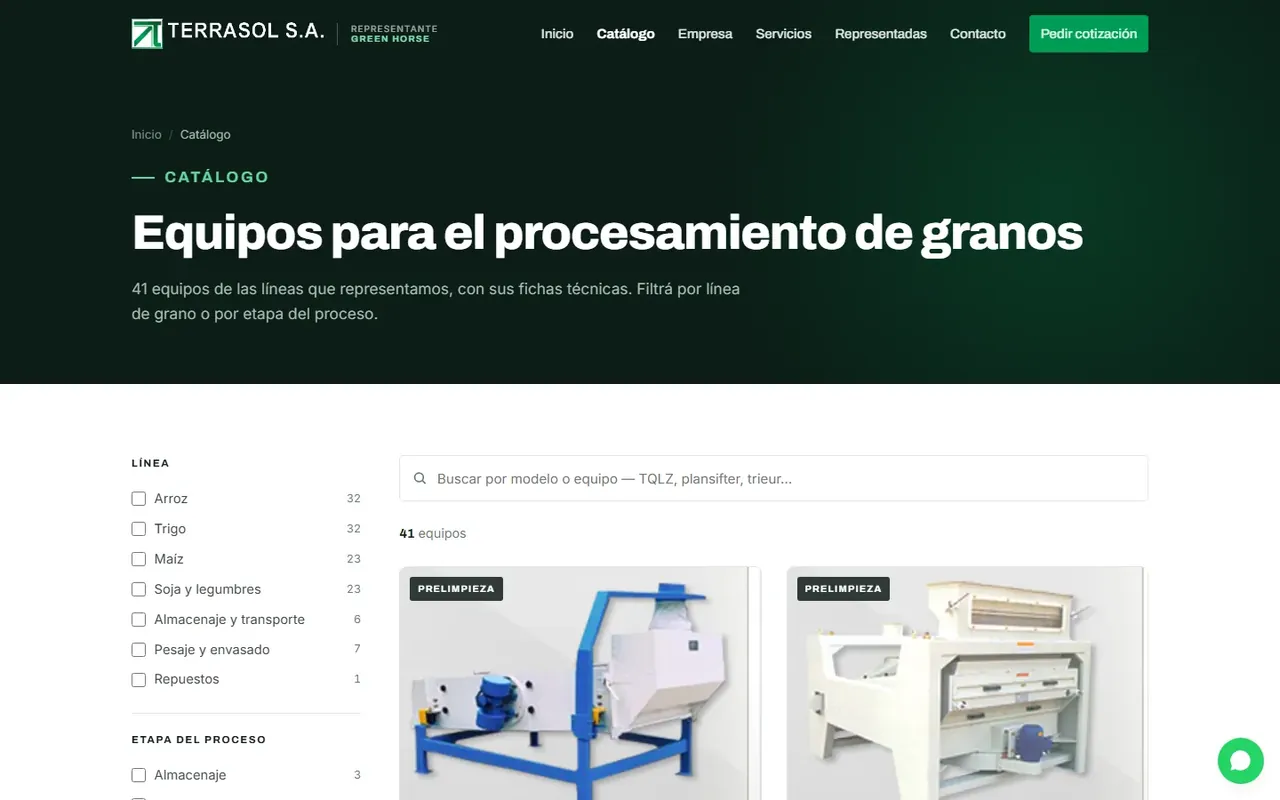
We did this for an agro-industrial machinery catalogue in Terrasol: filters, a page per item and an inventory system behind it, so the team updates stock without touching code.
Contact, per property
A form on the listing itself, WhatsApp with the code already written, and an answer the same day. The buyer who writes on a Saturday and hears back on Monday already visited two other properties.
How to know if it is working
Three numbers are enough, read once a month. How many enquiries arrive per property, how long you take to answer, and which pages bring the traffic from search. If a listing has five hundred visits and no enquiries, the problem is the listing, not the advertising.
- Enquiries per property, with the reference code in the form so you know which one.
- Time to first reply, measured in hours, not days.
- The five pages that bring the most visits from search, and whether they are for sale or to rent.